The median age of available houses has climbed to about 41 years old. This aging inventory comes at a time when new home construction isn’t keeping pace, pushing homeowners to invest in where they already live rather than move. In markets like ours (Capital Region), our housing stock fits this analysis almost perfectly.

What This Means for Homeowners in the Capital Region
Here in New York’s Capital Region, these national trends are even more relevant. Much of the local housing stock was built in the 1960s, 70s, and 80s, meaning many homes are now over 41 years old. Their layouts, finishes, mechanical systems, and energy performance often no longer match the way today’s families live. On the positive side, homeowners have experienced substantial appreciation in home values over the past several years. Many are sitting on strong equity positions, so for many families, improving their current home makes far more financial sense than purchasing a new one. Especially with their current mortgage interest rates lower than what they can get today.
Remodeling Spending Is Expected to Outpace Inflation
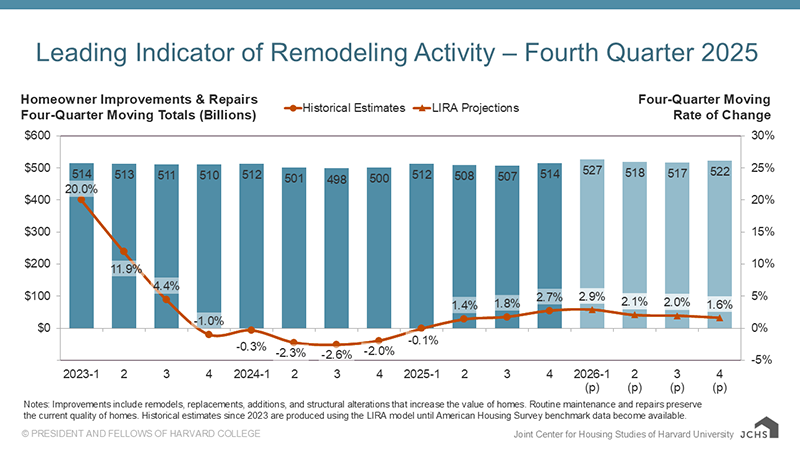
Industry sentiment remains strong. Surveys from the remodeling industry indicate continued positive outlooks, and projections show consumer spending on home improvements expected to outpace overall inflation in both the short and long term. Supported by long-term structural drivers, including an aging housing stock, strong home equity, and the trend among older homeowners to renovate rather than move. The sector continues to outperform single-family and multifamily housing in outlook because the remodeling sector isn’t being driven by speculation; it’s being driven by necessity and lifestyle. With homeowners increasingly financing projects and the remodeling sector gaining a larger share of residential construction spending, we can expect remodeling activity to grow about 3% in 2026 and another 2% in 2027 (see graph).